

Car vs. E-Bike: The Brutal Truth About Running Costs in Sydney & Melbourne for 2026
The short answer: if you mainly use a vehicle for commuting around Sydney or Melbourne, a legal e-bike can save you thousands every year.
Not hundreds.
Thousands.
A second car used for short local trips can easily cost $5,000–$10,000 or more per year once you add petrol, CTP, registration, comprehensive insurance, servicing, tyres, depreciation and parking.
An EWHIP e-bike has none of the big-ticket expenses:
- No registration
- No CTP insurance
- No compulsory driver licence
- No daily petrol bill
- No CBD parking fees
- A battery charge that costs cents, not dollars
This is the real electric bike vs car running costs Australia comparison. The car is convenient. But convenience gets expensive very quickly when you are paying to move one person 10 or 15 kilometres through traffic.
The Trap: A Car’s “Cheap” Commute Is Not Cheap
Most people only compare petrol with electricity.
That is the wrong comparison.
Petrol is just one line on the car bill. The expensive part is everything wrapped around it.
Consider a Sydney or Melbourne commuter travelling 30 kilometres per day, five days a week, for approximately 220 workdays:
- Annual commuting distance: 6,600 kilometres
- Petrol car consumption: 7 litres per 100 kilometres
- Average working petrol price: $1.90 per litre
- Discounted weekday parking: $30 per day
That is a fairly conservative example. It does not assume a thirsty SUV, premium parking, tolls or a young driver’s insurance premium.
The annual car bill
| Cost | Annual estimate |
|---|---|
| Petrol | $878 |
| CBD or inner-city parking | $6,600 |
| Registration and CTP | $800 |
| Comprehensive insurance | $1,300 |
| Servicing, tyres and repairs | $1,200 |
| Total running cost | $10,778 |
The numbers vary by vehicle, suburb and parking arrangement. A regional commuter may spend less. A casual CBD parker can spend much more. Sydney commercial car parks can reach $60–$80 or more per day, while Melbourne CBD casual rates can approach similar levels.
This is why the estimated cost of commuting Australia 2026 is so high for drivers. The car is not simply burning fuel. It is consuming cash while sitting in traffic.
And that table still excludes depreciation, finance interest and tolls.
The Math: What an EWHIP Costs to Run
Now compare that with a compliant EWHIP e-bike.
The Boom uses a 48V 20Ah Samsung lithium-ion battery with a claimed range of up to 80 kilometres, depending on rider weight, terrain, wind, tyre pressure, temperature and assistance level.
EWHIP estimates a full charge at approximately $0.27.
For 6,600 kilometres of annual commuting:
- 6,600 km ÷ 80 km per charge = 82.5 full charges
- 82.5 charges × $0.27 = approximately $22.28 per year in electricity
That is the energy cost for an entire year of weekday commuting under this example.
The annual EWHIP e-bike bill
| Cost | Annual estimate |
|---|---|
| Electricity | $22 |
| Routine servicing and consumables | $300 |
| Registration and CTP | $0 |
| Mandatory insurance | $0 |
| Parking | $0 |
| Total running cost | Approximately $322 |
Optional e-bike insurance may add to that figure, depending on the cover you choose. You may also replace brake pads, tyres or other wear items over time. That is normal.
Even allowing for $500–$600 per year, the difference is still dramatic.
Your potential annual saving
| Vehicle | Estimated annual running cost |
|---|---|
| Petrol car | $10,778 |
| E-bike | $322–$600 |
| Potential saving | Approximately $10,178–$10,456 |
That is the blunt financial reality.
The car vs. e-bike savings are not created by electricity alone. They come from removing parking, registration, CTP insurance, fuel and expensive vehicle maintenance from your daily routine.
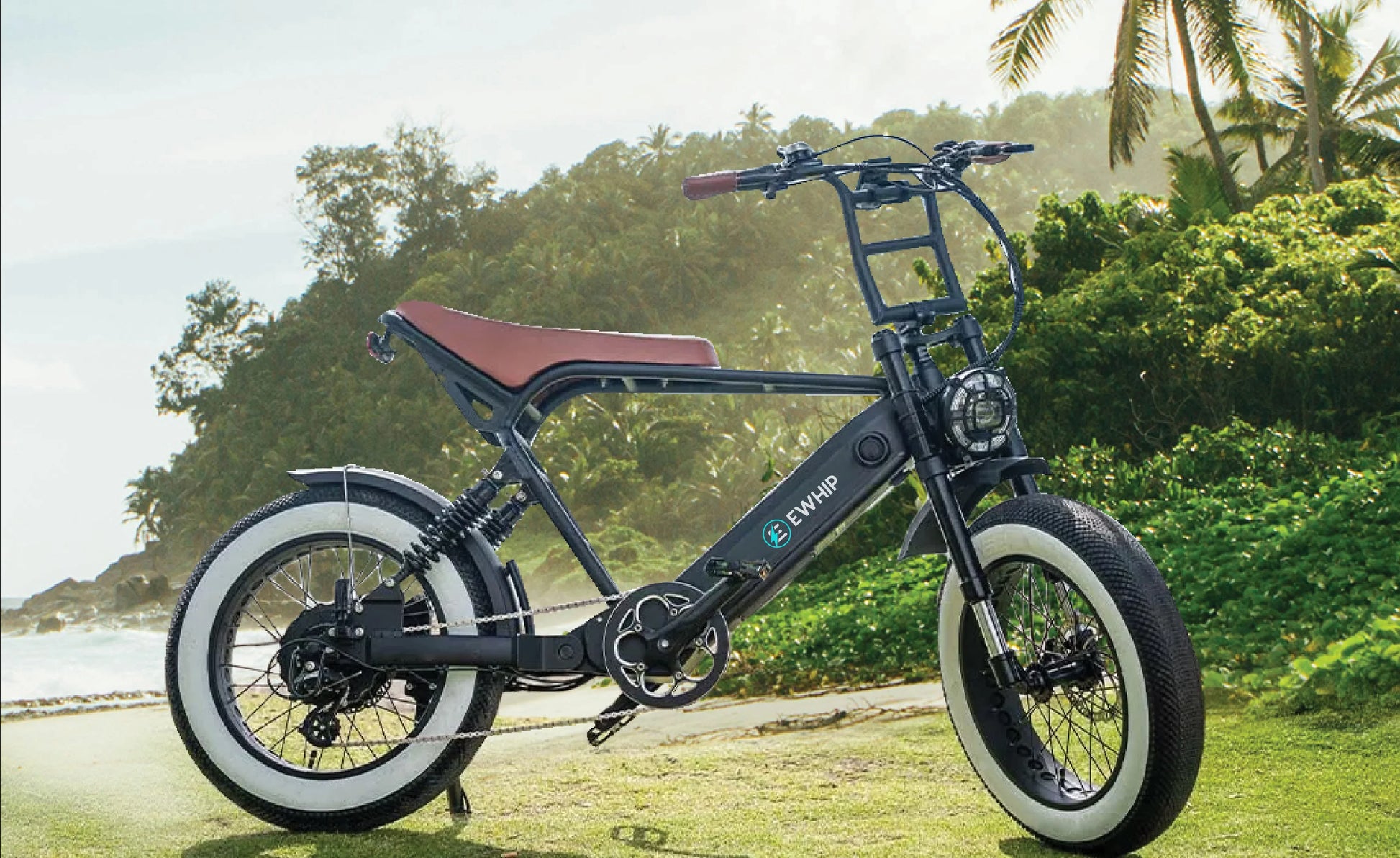
Electricity Costs Pennies. Petrol Keeps Charging You.
A 30-kilometre car commute at 7L/100km uses approximately 2.1 litres of petrol per day.
At $1.90 per litre, that is:
- $3.99 per day
- $878 per year, before parking and everything else
The EWHIP equivalent is approximately $0.10 per 30-kilometre commute, based on a $0.27 full charge and an 80-kilometre claimed range.
The result is not subtle:
- Car energy cost: approximately 13 cents per kilometre
- E-bike energy cost: approximately 0.3 cents per kilometre
Your exact result will depend on charging efficiency, battery condition, assistance level and electricity prices. But the direction does not change. An e-bike uses a tiny amount of energy to move one rider. A car moves a heavy machine around with you inside it.
That is a poor financial deal for short trips.
The Hidden Cost: Traffic and Parking
Money is only half the problem.
Inner-city driving also charges you in time.
A typical car commute into Sydney or Melbourne may include:
- Traffic on the main arterial road
- Time spent looking for a parking space
- Walking from the car park to the office
- Queuing to exit the car park
- More traffic on the return trip
An e-bike does not magically make every journey faster. Sydney rain, Melbourne weather, roadworks and route design still matter.
But on many inner-city corridors, a bike can be more predictable because it can use bike lanes, shared paths where permitted and quieter back streets. It also removes the parking hunt entirely.
You ride to the destination, lock the bike securely and walk inside.
That can turn a frustrating 45-minute car trip into a 25- or 30-minute ride. Your actual result depends on your start point, destination and route. The practical test is simple: map your commute, ride it once and compare the door-to-door time.
Do not compare “car speed” with “bike speed” in isolation. Compare the entire trip.
The Legal and Safety Advantage
This is where cheap and dodgy imports become a serious liability.
A bike that looks like an e-bike may legally be a moped or motor vehicle if it exceeds the applicable power, speed or throttle limits. If that happens, you may be dealing with registration, CTP, licensing requirements and penalties for riding an unregistered vehicle.
The grey area does not protect you.
EWHIP’s standard bikes are built around the compliant Australian configuration:
- 250W motor
- Pedal assistance that cuts out at 25 km/h
- Throttle or walk assistance limited to 6 km/h
- EN15194 certification
- Certified battery and electrical systems
That means no registration or driver licence is required for the compliant e-bike configuration. You must still wear an approved helmet, obey bicycle road rules and avoid modifications that defeat the certified limits.
In NSW, 2026 battery-safety requirements also make certification more important than ever. The NSW Government e-bike information and product-safety guidance should be checked before buying or modifying any e-bike. Victorian riders can review the Victoria Police e-bike safety guidance.
Read the paperwork. Check the markings. Do not trust a marketplace listing that simply says “street legal”.
You can view EWHIP’s testing and certification information on the EWHIP Certifications page.

Which EWHIP Is Right for Your Commute?
The Boom: Best for Urban Commuters
The Boom is the sharper choice if your priority is a confident, aggressive urban ride.
Its café racer styling, 20×4-inch fat tyres, suspension and hydraulic brakes suit riders who want comfort over potholes without looking like they are riding a basic bicycle.
It also includes practical commuting features:
- Rear cargo rack
- Powerful but compliant pedal assistance
- Shimano 7-speed gearing
- Comfortable retro tan-brown seat
- Up to 80 kilometres of claimed range
- Fat tyres for rough streets, gravel and coastal paths
You can view The Boom for current specifications and availability.
The Captain: Best for Comfort and Easy Mounting
The Captain is the better fit if you prioritise relaxed riding and easy access.
Its step-through frame makes getting on and off simpler, particularly when you are wearing work clothes, carrying a bag or making frequent stops. It combines the same street-legal 250W format with hydraulic braking, fat tyres, a removable Samsung-cell battery and a comfortable cruiser position.
It is a strong choice for coastal commuters, older riders and anyone who wants a calmer ride to the shops, station or beach.
The Bottom Line
If you need a car for family trips, long-distance travel or heavy loads, keep the car.
But if your car is mainly moving you through Sydney or Melbourne for short-to-medium commutes, the numbers are brutal.
A legal, certified e-bike can reduce your annual commuting costs from roughly $10,000-plus to a few hundred dollars. You can avoid parking fees, skip petrol stations, remove registration and CTP from the equation, and spend less time circling the block.
That is not a lifestyle gimmick.
It is a serious transport upgrade.
Choose a properly certified bike. Follow the rules. Wear your helmet. Lock it securely. Then replace the expensive car trips first: the short ones where the car gives you the least value and costs you the most.