

Fat Wheel Electric Bike Australia: The Complete Guide to Choosing the Right One in 2026
The short answer: a fat wheel electric bike is an e-bike fitted with much wider tyres: typically around 4 inches across: for extra stability, traction and cushioning.
That makes it particularly useful on Australian roads, coastal paths, compact gravel and uneven urban surfaces. But fat tyres are not a magic pass for soft sand, restricted beaches or unsafe riding. You still need the right pressure, the right route and a compliant e-bike.
If you are comparing a fat wheel ebike in Australia, this guide covers the decisions that matter: comfort, legality, maintenance, transport, value and real-world suitability.
What is a fat wheel electric bike?
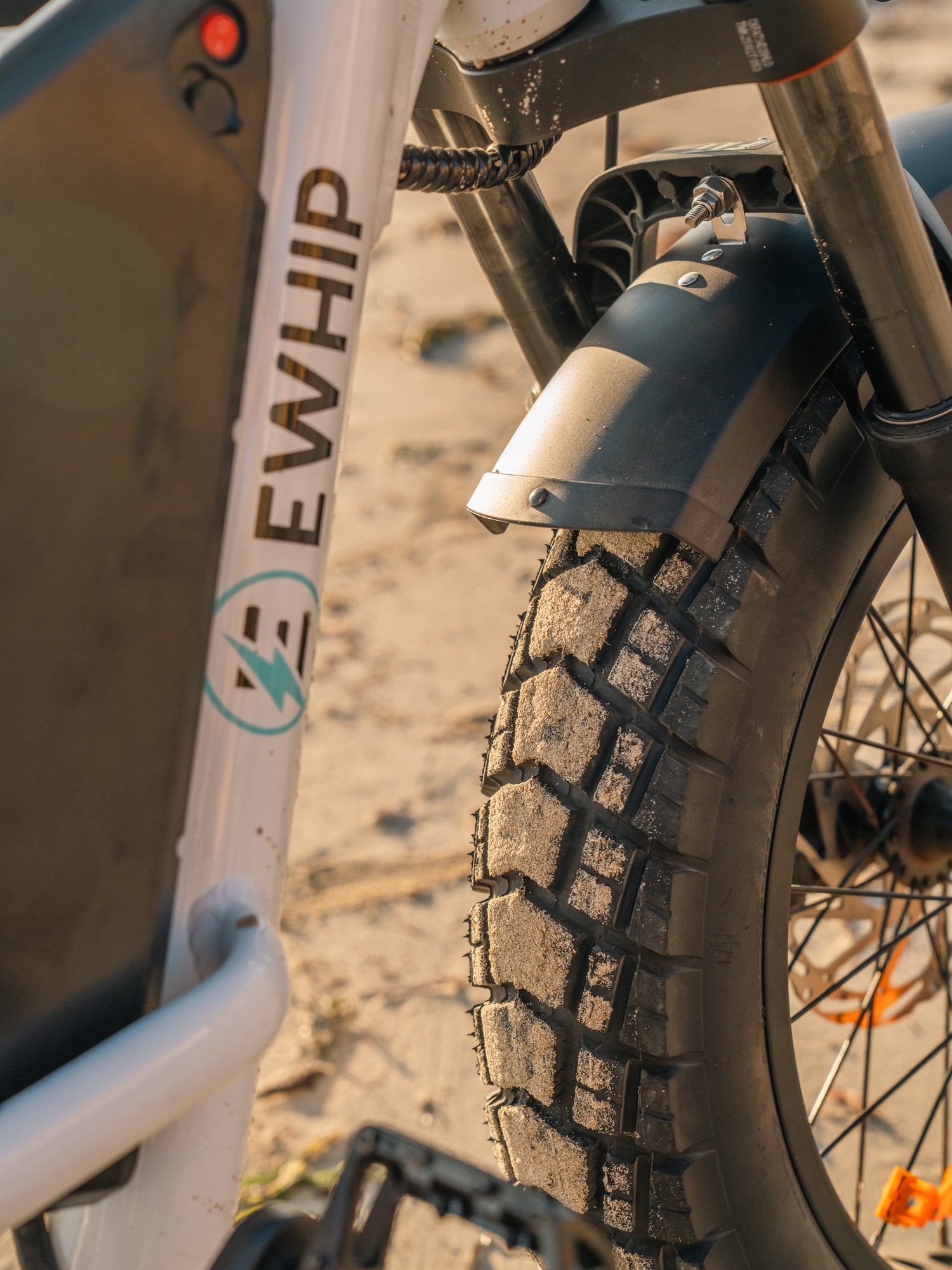
A fat wheel electric bike: also called an electric fat tyre bicycle: uses oversized tyres with a much larger contact patch than a standard commuter e-bike.
That wider footprint can provide:
- More stability at low and moderate speeds
- Better grip on loose gravel and uneven paths
- Extra cushioning over cracks and potholes
- Greater confidence for new or returning riders
- Improved traction in wet coastal conditions
The trade-off is straightforward. Fat tyres are heavier and generally create more rolling resistance than narrow commuter tyres. You may use more battery on the same route, and the bike can be harder to lift or fit into a small vehicle.
The grey area does not exist. You are choosing comfort and confidence over minimum weight and maximum efficiency.
Fat wheel e-bike vs standard commuter e-bike
| Factor | Fat-wheel e-bike | Standard commuter e-bike |
|---|---|---|
| Comfort | More cushioning from the larger air volume, especially with suspension | Usually firmer and more direct over rough surfaces |
| Stability | Excellent low-speed stability and planted handling | More agile, but can feel less forgiving |
| Sand and gravel | Better suited to compact gravel and firm coastal paths; not every soft-sand area is rideable | Best on sealed roads and maintained paths |
| Weight | Typically heavier due to wider tyres, stronger wheels and larger frame components | Usually easier to lift and carry |
| Efficiency | More rolling resistance, particularly at low pressure | Generally more efficient on smooth sealed roads |
| Storage | Needs more floor, rack and doorway clearance | Easier to store in apartments and small sheds |
| Ideal rider | Coastal riders, lifestyle commuters, comfort-focused riders and gravel explorers | Lightweight commuters prioritising speed, portability and efficiency |
A fat tyre electric bike Australia buyer should think about the majority of their rides: not the one adventurous trip they might take twice a year.
Who benefits from wider tyres?
Fat tyres are useful if you regularly ride:
- Broken suburban roads and speed bumps
- Coastal paths and packed gravel
- Wet or uneven surfaces
- Shared paths with frequent stops and starts
- Routes where comfort matters more than outright efficiency
- Areas where you carry groceries, work gear or beach equipment
They can also help riders who feel nervous on narrow tyres. The bike feels planted rather than twitchy. That extra confidence matters when you are navigating pedestrians, driveways, cambered roads and loose surfaces around Sydney, Melbourne, the Gold Coast or Perth.
However, wide tyres do not remove the need for good technique. You still need to slow down for corners, potholes, pedestrians and changing surfaces.
The Trap: fat tyres do not make every beach ride legal
A common mistake is assuming that a fat tyre makes an e-bike suitable for every beach.
It does not.
Soft, deep sand can bog down even a powerful electric fat tyre bicycle. Riding on dunes can damage sensitive coastal environments. Some beaches, reserves and shared paths prohibit bicycles or e-bikes altogether. Access rules vary by council, land manager and state.
Before riding:
- Check local access signs and council rules.
- Stay on permitted paths and designated riding areas.
- Use safe speeds around pedestrians.
- Do not assume the word “coastal” means “beach legal”.
- Avoid wetland, dune and conservation areas unless explicitly permitted.
Fat tyres improve flotation and traction. They do not override local law.
Tyre pressure changes the entire ride
Tyre pressure is one of the most important: and most overlooked: parts of owning a fat tyre electric bike.
Lower pressure can make the ride feel softer and improve grip on loose surfaces. Too low, however, can make steering vague, increase the risk of rim damage and cause the tyre to roll on the rim during hard cornering.
Higher pressure can improve efficiency and steering precision on sealed roads. Too high, and you lose some of the cushioning that makes fat tyres worthwhile.
Use this approach:
- Check the pressure range printed on the tyre sidewall.
- Start within the manufacturer’s recommended range.
- Use a reliable pressure gauge.
- Adjust gradually for rider weight, cargo and terrain.
- Check pressure before longer rides and at least weekly if you commute.
A heavier rider or loaded cargo rack generally needs more pressure than a lighter rider on an unloaded bike. Do not copy a random PSI number from an online forum. Your tyre, wheel, load and terrain are different.
What to inspect before buying
A cheap, dodgy import may look impressive in a product photo. That tells you almost nothing about its safety, legality or long-term support.
Before buying a fat wheel electric bike, inspect five areas.
1. Trust and compliance
Ask for clear evidence of:
- The continuous-rated motor power
- Pedal-assistance cut-off at 25 km/h
- Applicable EPAC configuration
- Throttle or walk-assist limits, where fitted
- Battery testing and safety documentation
- Certification information, including EN15194 where claimed
EN15194 is useful certification information. It is not a substitute for checking current state or territory law.
Read EWHIP’s Certifications page and our existing How to Choose an E-Bike guide before you buy. For local requirements, use our State-by-State E-Bike Laws guidance and confirm the latest rules with your state road authority.
2. Lifestyle and utility
Check whether the bike includes the equipment you will actually use:
- Front and rear suspension
- Hydraulic disc brakes
- Proper lighting
- Mudguards
- Cargo rack compatibility
- Comfortable saddle and riding position
- A removable battery if indoor charging matters
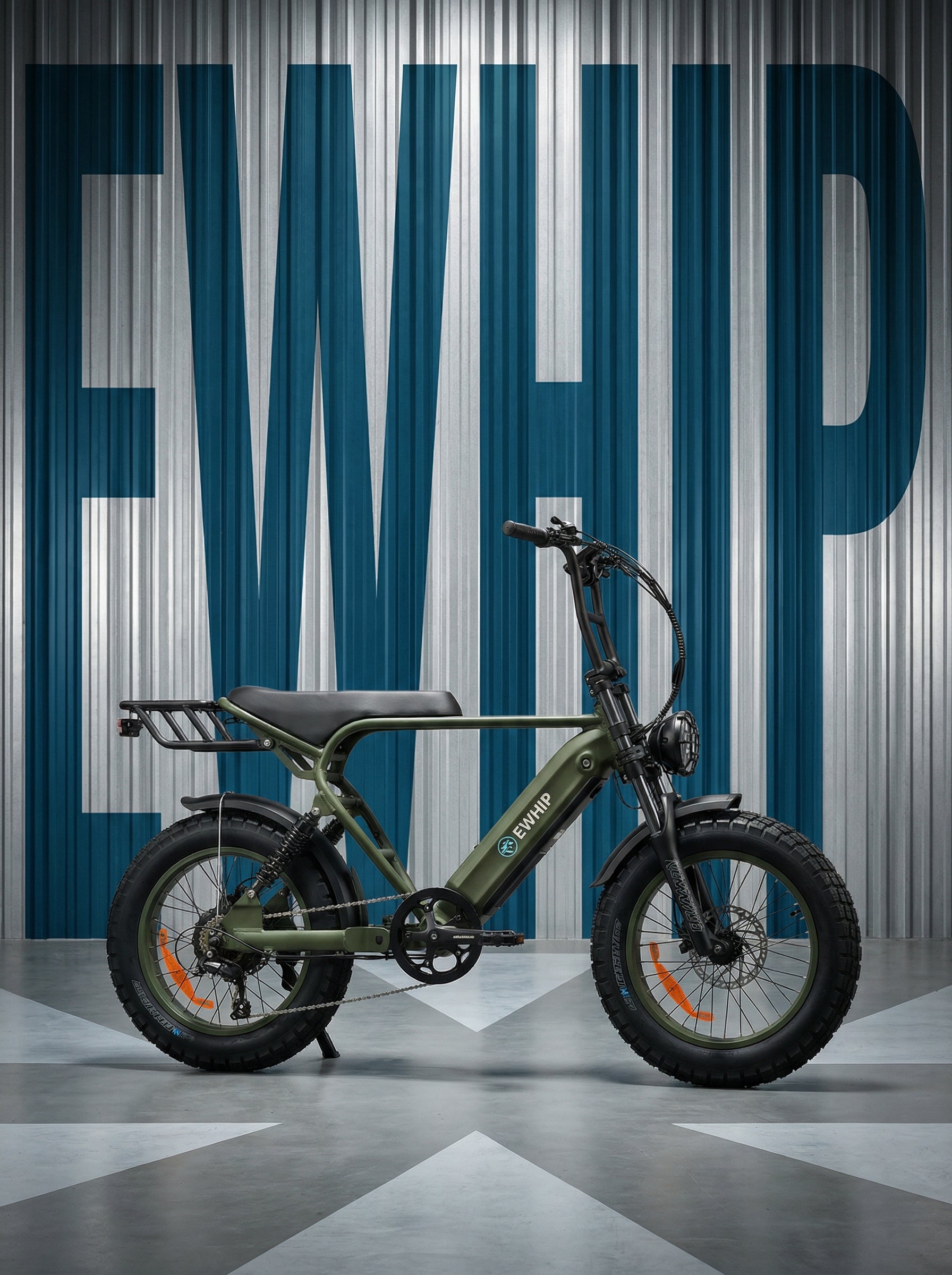
EWHIP’s 20x4.0-inch fat tyres, suspension, hydraulic brakes and cargo capability are designed around everyday Australian riding: from sealed streets to coastal paths and compact gravel.
3. Demographic and fit
Choose the frame around how you need to get on, ride and stop.
The Captain is the better fit for riders who prioritise easy mounting, an upright posture and relaxed comfort. Its step-through frame is practical for frequent stops, everyday errands and riders who do not want to swing a leg over a high top tube.
The Boom suits riders drawn to café-racer styling and a more active urban or coastal look. It has the same broad-tyre confidence while bringing a more aggressive vintage aesthetic to the ride.
Do not judge fit by tyre size alone. Check handlebar reach, saddle position, foot placement, standover clearance and whether you can comfortably place both feet down when stopped.
4. Financial and value considerations
The cheapest bike is rarely the cheapest ownership experience.
Compare:
- Warranty length and what it covers
- Australian-based service support
- Battery replacement availability
- Spare parts access
- Shipping costs
- Assembly and setup help
- Test-ride or return conditions
EWHIP includes free Australia-wide shipping, a 2-year warranty with Australian-based service and a 30-day risk-free test ride. Those policies matter because a premium e-bike should be supported after the sale: not abandoned after delivery.
5. Head-to-head model choice
| If your priority is… | Choose… |
|---|---|
| Easy mounting and relaxed upright comfort | The Captain |
| Café-racer styling and an active urban/coastal feel | The Boom |
| Carrying shopping, beach equipment or commuting essentials | Either model, with cargo capability |
| A smoother ride over rough paths | Either model, with fat tyres and suspension |
| A compliant daily e-bike | Confirm the 250W, 25 km/h and certification details before riding |
Legality and battery safety in 2026
For public riding, look for the applicable 250W continuous-rated EPAC configuration, pedal assistance that cuts off at 25 km/h, and any throttle or walk-assist limits required in your state or territory.
Rules and enforcement can vary. NSW has also introduced increased focus on e-bike battery safety in 2026. Do not rely on a sales badge alone. Ask what has actually been tested and documented.
Safe battery habits are simple:
- Use only the supplied or approved charger.
- Charge on a hard, clear, non-flammable surface.
- Keep the battery away from heat, water and direct sun.
- Do not use a swollen, cracked or damaged battery.
- Avoid charging in a blocked exit or beside flammable clutter.
- Store the battery in a cool, dry place when the bike is not being used.
A compliant bike protects you from legal trouble. A properly maintained battery protects your home.
Fat tyre electric bike Australia buying checklist
Before ordering, confirm:
- The motor’s continuous-rated power is clearly stated.
- Assistance cuts out at 25 km/h.
- The bike is pedal-assist compliant.
- Any throttle or walk assist meets local rules.
- Certification documents are available.
- Tyre pressure guidance is provided.
- The frame suits your height and mounting needs.
- Suspension and hydraulic braking match your terrain.
- Cargo capacity suits your daily routine.
- Warranty, returns, service and shipping are clear.
- Your intended roads, paths and beaches permit e-bike access.
Frequently asked questions
Is a fat wheel electric bike legal in Australia?
It can be, provided it meets the applicable e-bike requirements for the state or territory where you ride. Check continuous motor power, pedal assistance, 25 km/h cut-off, throttle limits and certification evidence. Fat tyres themselves do not make a bike illegal.
Are fat tyres good for Australian roads?
Yes. They can make rough suburban roads, potholes, wet paths and compact gravel feel more stable and comfortable. They are less efficient than narrow tyres on smooth roads and are not automatically suitable for deep sand.
What is the best fat wheel ebike Australia riders can buy?
The right choice depends on fit. Choose The Captain for step-through access and upright comfort. Choose The Boom for café-racer styling and an active urban or coastal ride.
Do fat tyres require special maintenance?
They require regular pressure checks, tread inspections, spoke checks and brake inspections. Salt, sand and moisture should be cleaned from the bike after coastal rides. Avoid directing high-pressure water at bearings, electrical connections or the battery.
Should I buy a fat tyre electric bike or a standard commuter e-bike?
Buy a fat tyre model if comfort, stability, gravel capability and coastal utility are priorities. Choose a standard commuter if low weight, compact storage and maximum road efficiency matter more.
The bottom line
A fat wheel electric bike is a strong choice for Australian riders who want stability, comfort and genuine versatility. It can smooth out ugly roads, add confidence on gravel and carry the practical load of daily life.
But buy the complete package: not just the biggest tyres.
Prioritise compliance, reliable brakes, useful suspension, correct tyre pressure, battery safety, local support and a frame that fits your body. Then choose your riding style: the easygoing, upright Captain, or the distinctive, café-racer-inspired Boom.
That is how you get more than a fat tyre electric bike Australia can sell you. You get a bike you can confidently ride, maintain and enjoy.